Image

CUNJC Cambridge
Summer School Programme

Academic programme • Hackathon projects •  Professional development • Cambridge student life

Focused on applied quantitative fields that power today's data-driven economy — data science, AI, economics and finance — our Academic Programme connects theory with practice from day one. A one-week online prep course (maths, stats and coding basics) precedes arrival. Each two-week course combines daily lectures and practical Python/R classes with team projects, producing skills directly transferable to postgraduate study and data-intensive roles.

Programme overview
Programme Dates 2026 

Course Location Dates
Prep course Online 20–26 July
Session one Cambridge 1–16 August
Session two Cambridge 16–30 August

Sessions & Courses

Choose to attend one or two sessions. Choose one of twelve courses per session. One course lasts for two weeks, and contains one module and one related team project per week. Total teaching is Lectures (15h) → Classes (15h) → Project (30h).

Equivalence & Class size

Each course is equivalent in the amount of material to a full-term Cambridge undergraduate course. Maximum 20 students per course in lectures and classes. Hackathon team projects in groups of 4-5 students. 

Recognition & Credit

Receive 3-4 credits (US) / 7.5 ECTS (EU), subject to approval from your university. Receive an official Certificate of Achievement from the Cambridge University - Nanjing Centre. Recommendation letter available for top performing students.

Prerequisites & Preparation

Basic understanding of quantitative methods, including calculus and probability, is essential. Our Online Prep Course will cover core maths, stats and coding (Python/R) concepts you will need to follow the courses.

Summer School Timetable

Applications are now open for Summer 2026. Secure your place at Cambridge Summer School

image

Structure & timetable

9-12am: Academic Programme 

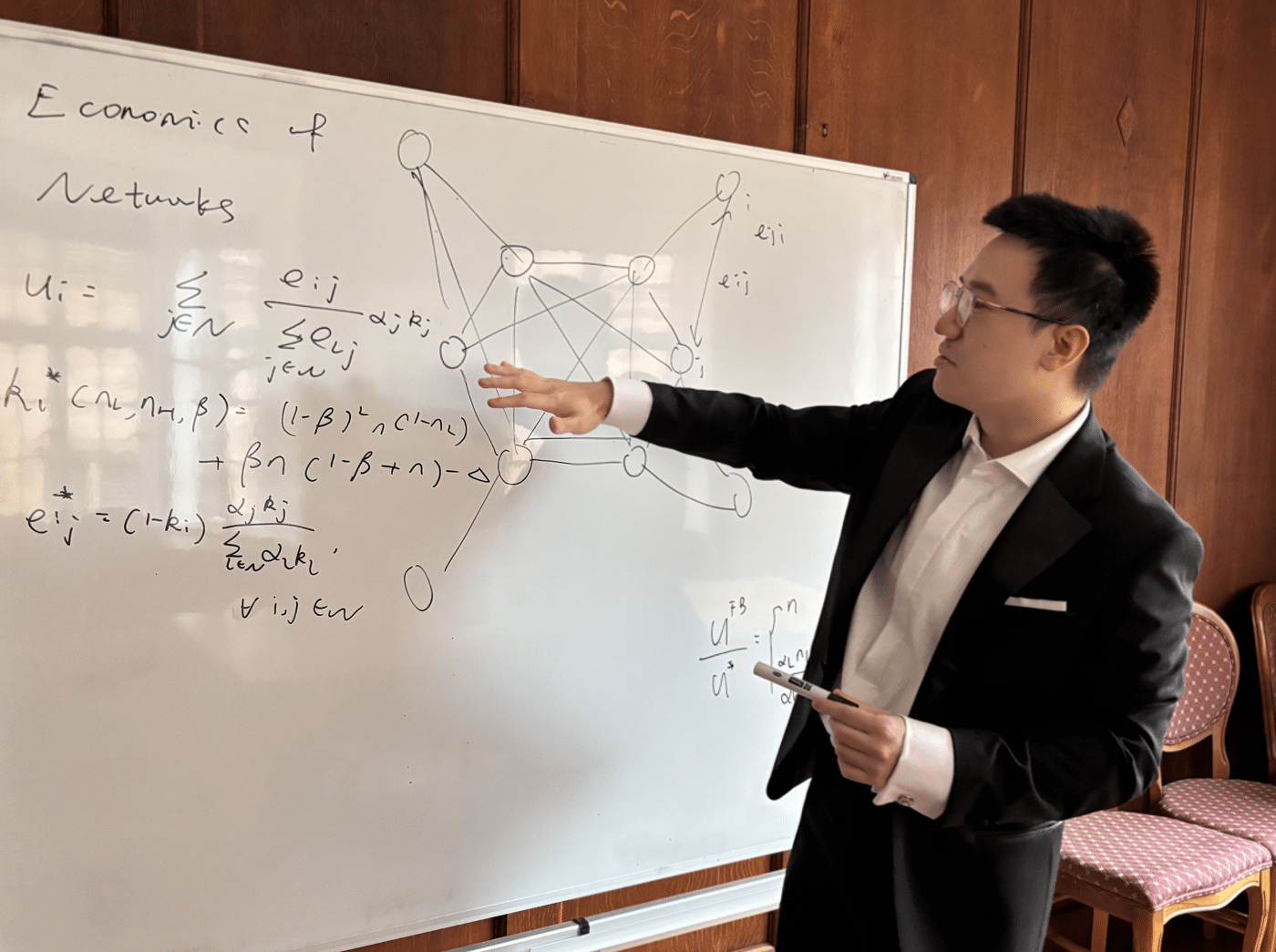
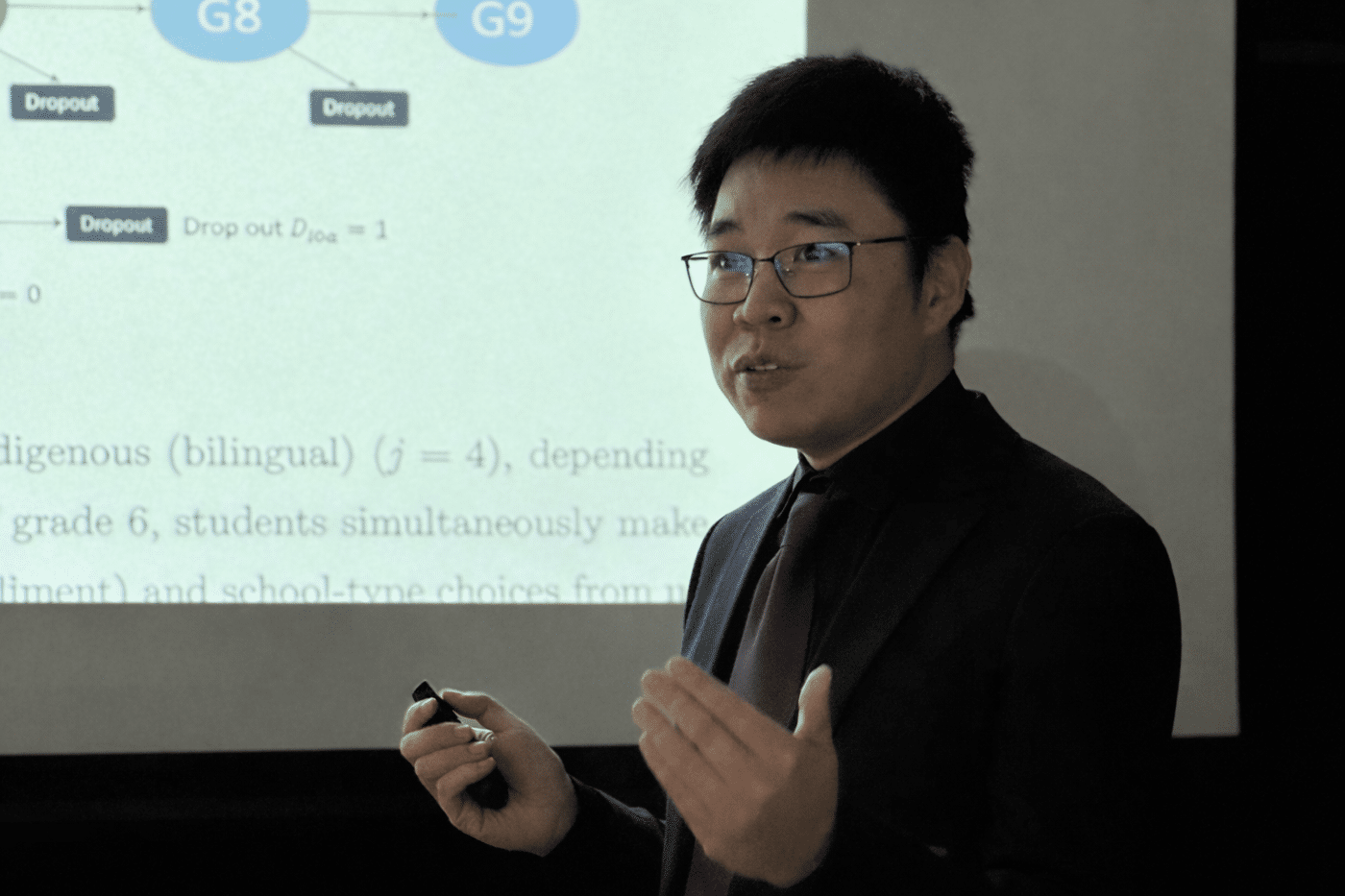
Award-winning instructors deliver lectures with short concept bursts and live demos of empirical data tools in Python/R, then you apply them to real datasets in hands-on classes with our guidance.

2-5pm: Hackathon Projects

You carry that momentum into mentored team projects, applying class tools to real problems—forecasting, causal inference, portfolio optimisation, text mining—to build a portfolio-ready project, and present it at the end of the week. 

5-6pm: Professional Development

We host keynote speakers, career panels by business leaders in AI and finance, leadership coaching, and postgraduate admissions workshops so you can grow your academic and professional network and strengthen future opportunities.

6-8pm: Social Programme

We curate speaker receptions, informal networking, and Selwyn College formal hall dinners so you can unwind, build relationships, and enjoy Cambridge—city and college tours, punting, museums, and more.

Summer School Timetable

Applications are now open for Summer 2026. Secure your place at Cambridge Summer School

feature 1
Download full timetable

Summer School Timetable

Applications are now open for Summer 2026. Secure your place at Cambridge Summer School

Academic programme

We run two sessions in Cambridge: Session One, 1–16 August, and Session Two, 16–30 August. In each session we offer all 12 of our courses. You can join us for one or both sessions, choosing one course per session. Every course runs for two weeks and combines lectures, small-group classes and team projects.

Data Science & AI courses

Learn the quantitative tools — from maths and stats to ML and AI — that power modern analysis and research.

Mathematical methods
Statistical methods
Causal data science
Econometrics
Machine learning
Artificial intelligence

Economics & Finance courses

Apply models and data-driven methods to understand markets, economies, networks, and systemic risks.

Microeconomics
Macroeconomics
Network economics
Complexity economics
Quantitative finance
Financial markets

A day in the academic programme
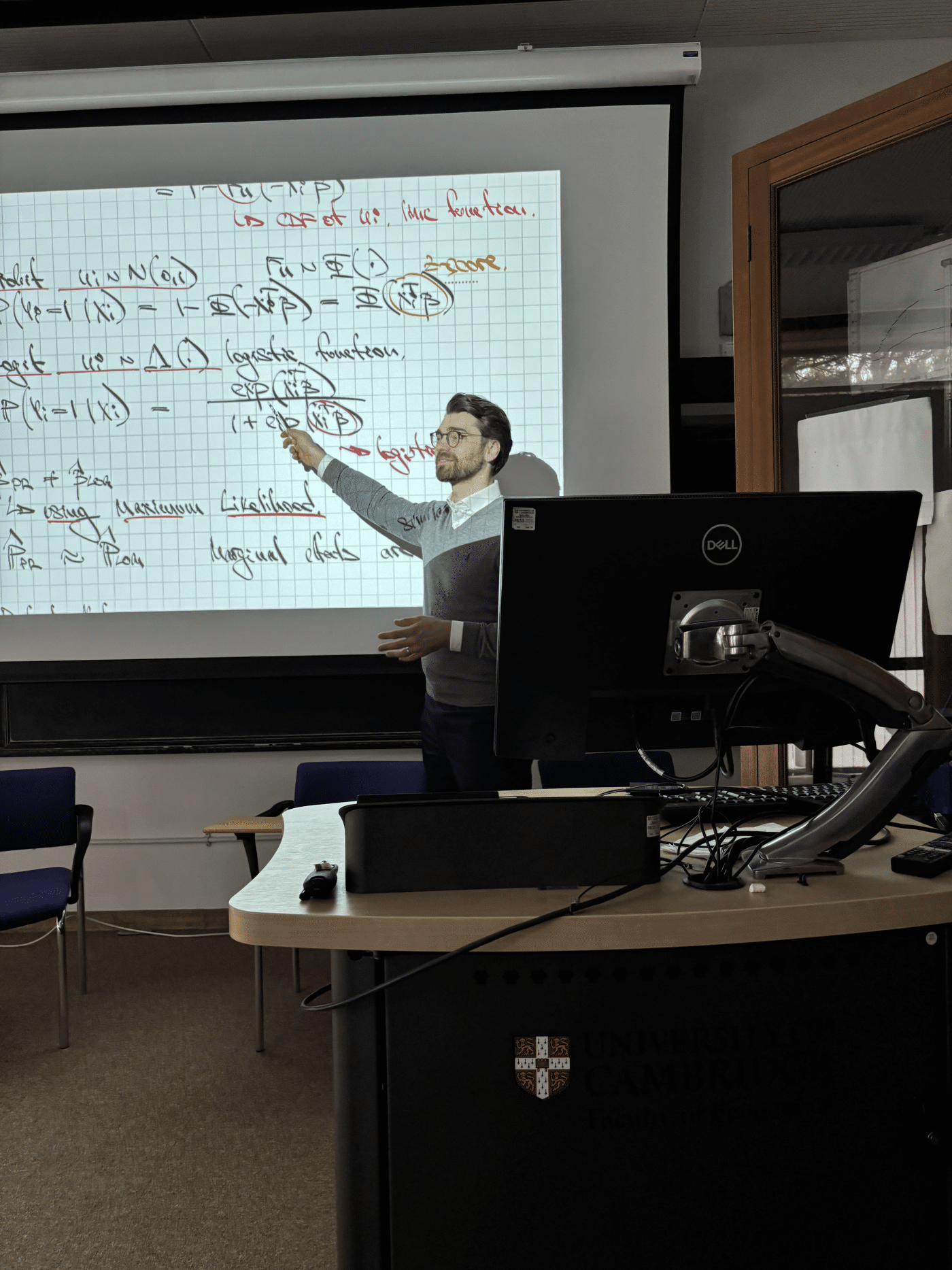
The Academic Programme takes place in the mornings and contains two parts. First, in a 1.5-hour lecture we introduce one core idea and demonstrate a practical tool in Python or R. Then, in a 1.5-hour class, you practise that tool on real structured data with our step-by-step coaching. This daily learn-demo-practise cycle gradually builds mastery, so you can confidently apply each method in your team projects on real questions and new unstructured datasets

Sample day: Causal data science

Here is what you can expect your mornings to look like for the course in Causal Data Science, week 1 module on Causal Inference, discussing the Difference-in-Differences (diff-in-diff) estimation method.  

Lecture

Idea

Diff-in-diff compares changes over time between a treatment and a control group

Demo

Use diff-in-diff to estimate whether free school meals improve student test scores

Data

Online UK Education Endowment Foundation (EEF) school trial dataset

Code

Analyse treatment × post-intervention effects using statsmodels in Python

Class

Practice

Use diff-in-diff to assess how Uber affected taxi employment across UK cities

Guidance

Estimate treatment effect, conduct testing, interpret results, discuss

Data

UK Labour Force Survey (LFS) data for taxi drivers before and after Uber entry

Code

Diff-in-diff in Python, pandas for data prep and statsmodels for estimation. 

Hackathon projects

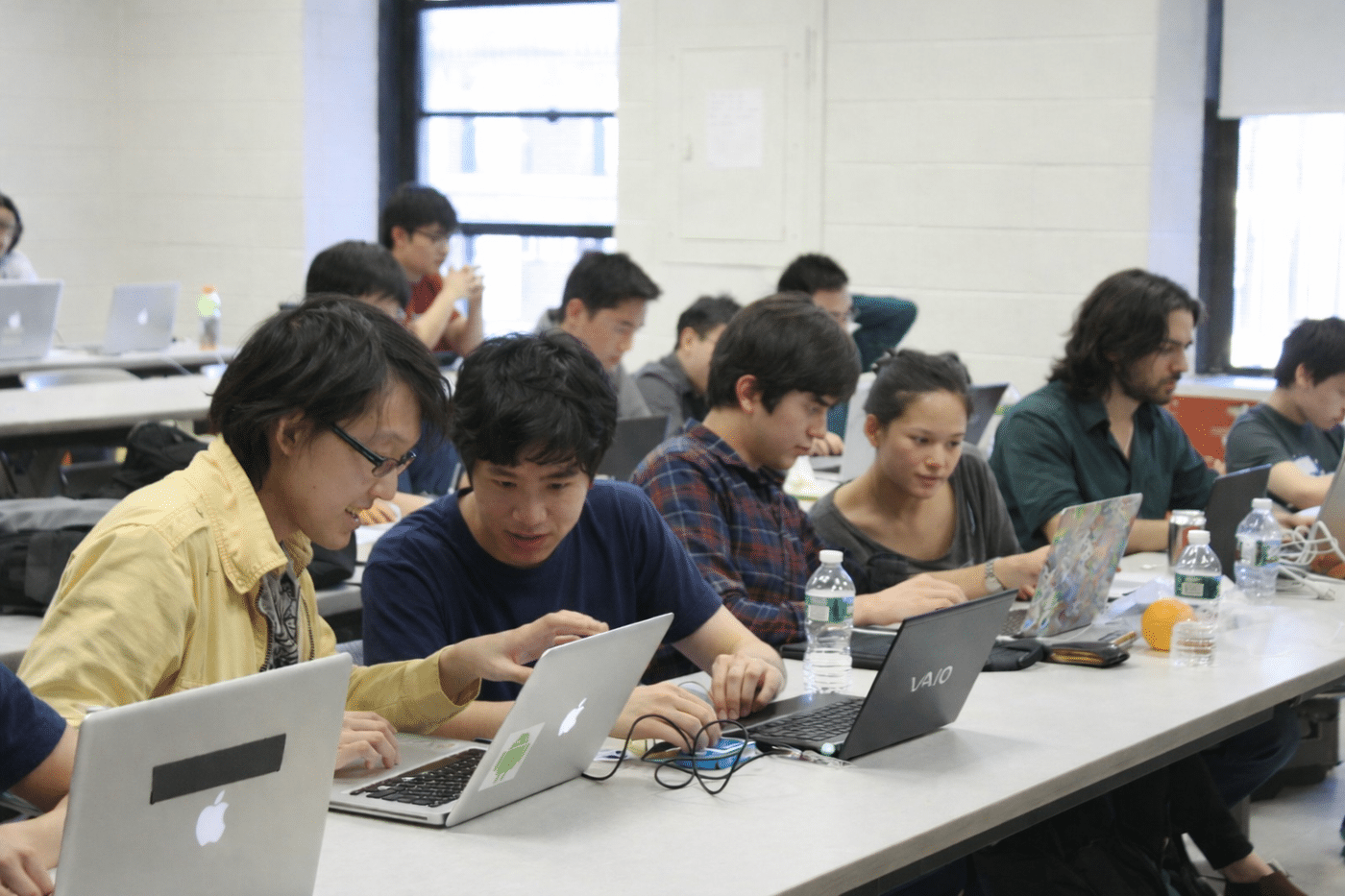
One project per week — mentored sprints tackling hot topics in economics, finance, data, and AI. In teams of maximum five people you’ll design your approach, share roles, and code in Python/R to analyse real data using tools from class, turning results into a sharp report and final presentation. Our projects mirror how work gets done outside class — short cycles, quick feedback, clear ownership — so learning sticks and confidence grows. You leave Cambridge with a portfolio-ready project, actionable insights, and proven teamwork and communication — wins you can showcase in CVs, applications, and interviews.
PlaceholderImage1314
image

Challenge

Fast and focused: one week, one module, one project.
Applied projects: apply classroom methods and Python/R tools to real data.
Impactful themes: tackle hot topics in economics, finance, data science and AI.

image

Process

Small teams: work in mixed roles across analysis, coding, writing, and visuals.
Real-world workflow: plan together, split tasks, integrate, and review.
Live coaching: receive daily guidance and feedback from instructors.

image

Outcome

Shareable output: produce visuals, a slide deck, and a one-page summary.
Showcase finish: deliver a short demo to explain what you built and why it matters.
Portfolio-ready: graduate with a project you can show to employers / grad schools.

Sample project: Machine learning

In this project for the Machine Learning course (Unsupervised Learning module), you’ll work with real crypto market data to spot bubble periods and uncover the patterns behind booms and crashes using clustering and PCA. Guided by instructors and teaching assistants, you’ll build the analysis step by step in Python using tools from lectures and classes.

Title

Clustering cryptocurrency bubbles.

Goal

Detect bubble episodes in crypto markets to uncover patterns in their formation and collapse.

Data

Daily prices, returns, and trading volume for Bitcoin, Ethereum, and major altcoins.


Method

k-means clustering, PCA, rolling-window volatility measures, anomaly detection.

Code

Python pandas/numpy for data, scikit-learn for clustering, matplotlib / seaborn for visuals.


Output

A portfolio-ready analysis of crypto bubble dynamics with cluster profiles (demo + report).

Professional development

A distinctive part of our Summer School is a series of talks with global academic leaders, senior finance and AI executives, professional leadership coaches and Cambridge admissions tutors. They offer practical guidance, insider perspectives and inspiration for your academic and professional path. Drinks receptions and dinners with speakers let you build meaningful connections in an informal setting. These conversations often develop into mentoring and networking that support your ambitions, so you leave Cambridge with a network that lasts.
PlaceholderImage1314
image

Keynote lectures

Hear Cambridge professors connect economics, finance and AI research to insights you'll apply to global challenges in projects and real life.

image

Career talks

Gain first-hand career insights from industry leaders in AI , finance, and economics through talks and panels on real-world challenges.

image

Leadership coaching

Work with professional coaches in interactive workshops to develop your leadership, confidence, resilience and collaboration skills.

image

Admission workshop

Get insider guidance from Cambridge academics and admissions experts on applications, selection criteria and strategies to secure master’s or PhD places worldwide.

Confirmed speakers

Member Alt
Romans Popovs VP M&A Customers & Products, Trading & Shipping at BP
Member Alt
Ayoub Semaan Partner at Cultivating Leadership, a professional training firm
Member Alt
Maksim Sipos Co-founder and CTO at causaLens, a leading AI company

Ready to join us?

Secure your place at the CUNJC Cambridge Summer School 2026.

Apply now