image

Welcome to CUNJC
Cambridge Summer School

I’m delighted to invite you to the Cambridge Summer School of the Cambridge University–Nanjing Centre for Technology and Innovation.

Choosing a summer school is a big decision. If you’re asking, “Why this programme?”, my honest answer is: because of the people behind it and how we teach. We’re a close-knit team of Cambridge educators who’ve spent years developing innovative, award-winning methods that help our own students thrive. Our mission now is simple: to share that experience with you.

You’ll learn by doing: small-group teaching, real data, project-centred work, daily coaching and rapid feedback that turn concepts into confidence. We’ll meet you where you are and guide you to where you want to be.

By the end, you’ll leave with a certificate and references, a portfolio-ready project, mastery and confidence with applied tools, clearer goals, admissions know-how, practical leadership and teamwork skills, and a global network, plus the friendships and Cambridge memories that last.

We can’t wait to welcome you and stand beside you as you build your future.

See you in Cambridge!

Oleg Kitov
Associate Professor, University of Cambridge
Academic Director, CUNJC Cambridge Summer School

Image

Programme instructors

Our programme is designed and delivered by award-winning academics from the
University of Cambridge — members of the Faculty of Economics and fellows of its colleges.

Member Alt
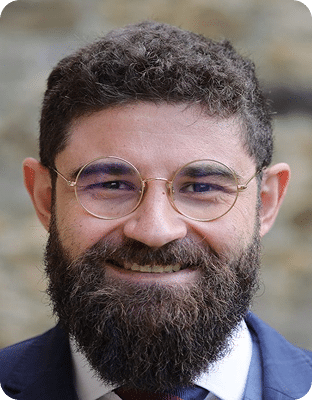
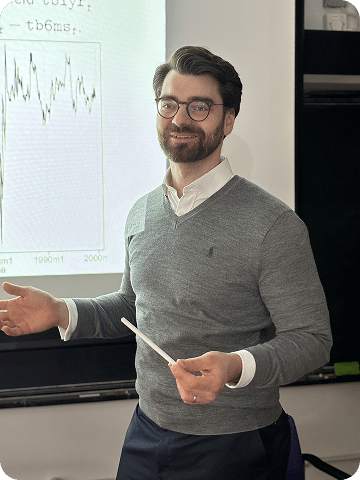
Roman Berlanger Teaching Associate
Roman is a researcher in Cambridge’s Leverhulme Neuroeconomics Lab and Teaching Associate at Selwyn College. He has taught macroeconomics, finance, industrial organisation, physics and operations management in top European universities. He holds postgraduate degrees in economics, finance, psychology and engineering from Cambridge and HEC Paris. His research examines decision-making under computational complexity.
Member Alt
Daniele Cassese Assistant Professor
Daniele is the Isaac Newton Trust Career Development Fellow at the University of Cambridge; Director of Studies in Economics and Fellow at Trinity Hall College. For a decade, he taught microeconomics, mathematics, statistics, industrial and network economics at Cambridge and Oxford. He earned his PhD in Economics from the University of Siena, and his research explores networks and complex systems.
Member Alt
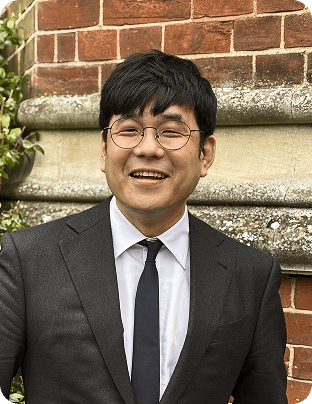
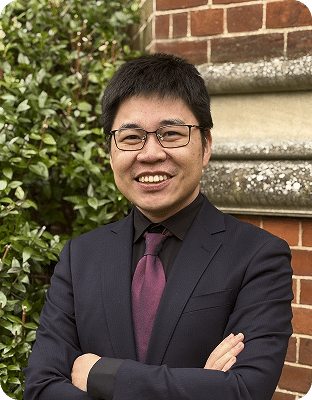
MyunGun Kim Assistant Professor
MyunGun is an Assistant Professor of Economics at the University of Cambridge; Director of Studies in Economics and Fellow at Selwyn College. For over a decade, he has taught macroeconomics, statistics, and econometrics at Cambridge, earning the Faculty of Economics’ Best Teaching Prize three times. He earned his PhD at Cambridge, and his research measures productivity, tracing how changing firm structures and business-model innovation reshape it.
Member Alt
Oleg Kitov Associate Professor
Oleg is an Associate Professor of Economics and Director of Undergraduate Admissions at the University of Cambridge; Director of Studies and a Robert Martin Fellow at Selwyn College. Over 15 years, he has taught 20+ courses at Cambridge and Oxford and won student-led, institutional and international teaching awards. With degrees from Cambridge, Oxford and Warwick, his research bridges applied econometrics, machine learning and income inequality.
Member Alt
Vasileios Kotsidis
 Associate Professor
Vasileios is an Associate Professor of Economics at the University of Cambridge, Director of Studies, and Fellow of Gonville & Caius College. An award-winning lecturer, he has taught microeconomics, mathematics, statistics, and political/public economics at Cambridge and LSE for over a decade. With a Nottingham PhD and Cambridge MA, his research advances traditional and evolutionary game theory applied to social interaction.
Member Alt
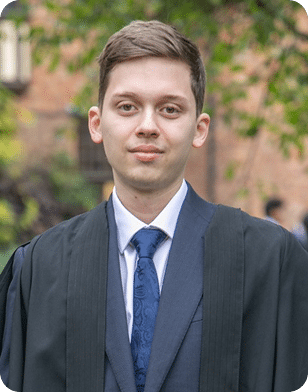
Dmitrii Petroukhin Teaching Associate
Dmitrii is a postgraduate researcher at the University of Cambridge and a Teaching Associate at Selwyn College. He teaches undergraduate and postgraduate econometrics and data science. Educated at LSE and Cambridge, he studies development and political economy — examining how institutions shape growth using econometrics and machine learning.
Member Alt
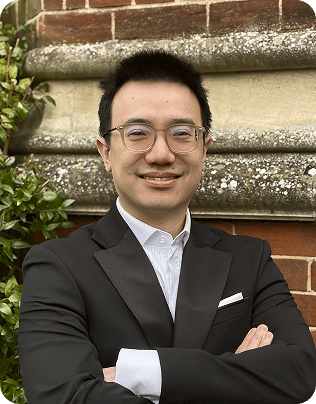
Ruohan Qin Assistant Professor
Ruohan is an Assistant Professor of Economics at the University of Cambridge; Director of Studies, and Fellow of Murray Edwards College. He has taught microeconomics, labour economics, networks, and industrial organisation, earning the Faculty’s Best Teaching Prize several times. With postgraduate degrees from Cambridge, LSE, and Nottingham, his research focuses on microeconomic theory, especially networks and game theory.
Member Alt
Weilong Zhang Associate Professor
Weilong is an Associate Professor of Economics at the University of Cambridge, Postgraduate Admissions Officer, and Fellow at Selwyn College. He has taught microeconomics, finance, labour, and public economics, consistently receiving top evaluations. He holds a PhD from the University of Pennsylvania; his research spans labour, education, household finance, and psychological economics, with publications in top academic journals.

Our instructors are recognised by global teaching awards and nominations

Logo Logo Logo Logo Logo Logo Logo

Our Teaching Philosophy

Cambridge-style teaching delivered in small groups by award-winning academics. You’ll move from lectures and demos to hands-on practice in Python and R, working with real datasets and learning step by step — from following example code to writing your own — while getting immediate feedback that sharpens your skills. This evidence-based approach builds fluency and confidence, leaving you with industry-ready methods you can apply, showcase, and trust — a foundation that strengthens CVs, supports graduate study, and underpins future research or career.

Evidence-based →

we use what research and students say works

Student-focused →

designed around your academic and career goals

Active learning →

practise with immediate personalised feedback

Gradual release →

we model and guide, you practise and apply

Project-based →

work with real data to produce portfolio-ready output

Collaboration →

team up with peers to deliver the project

Lifelong learning →

leave with confidence to build your future

Our teaching philosophy

Cambridge-style teaching in small groups with award-winning academics. You’ll move from lectures and demos to hands-on Python and R with real datasets, going from example code to writing your own, with immediate feedback that sharpens skills. This evidence-based approach builds fluency and confidence, leaving you with industry-ready methods to apply and showcase — a foundation that strengthens your CV and supports future study, research and careers.

feature 1

Evidence-based

We use research-backed methods that boost your outcomes and confidence.

Student-focused

Designed around your goals, interests and pace, maximising progress each week.

Active practice

Practise daily with real tasks and personalised feedback to master skills.

Gradual release

We model and guide; you practise independently until techniques feel natural.

Project-based

Work with real data to create portfolio-ready projects recruiters remember.

Collaborative work

Team up with peers, building communication, leadership and problem-solving.

Lifelong growth

Leave with tools, mindset and confidence to keep learning and progressing.

Ready to join us?

Applications are now open for Summer 2026. Secure your place at Cambridge Summer School